26 Sep 2026
Shifts in Player Retention Metrics Linked to Bonus Timing Variations Across Mobile Poker and Roulette Platforms
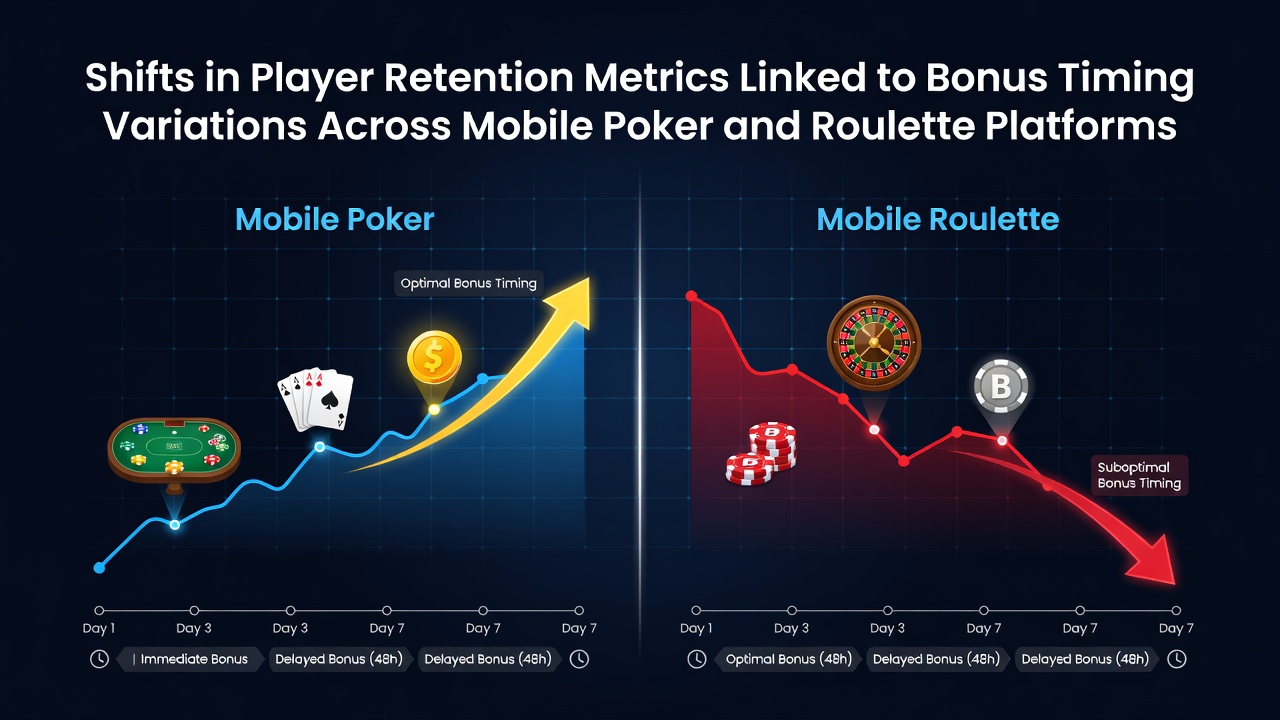
Platform operators have tracked retention rates across mobile poker and roulette titles for years, and recent analyses tie those figures directly to the precise moments when bonuses activate. Data compiled through September 2026 reveals that daily login rewards produce different stickiness patterns than event-triggered incentives tied to specific hand counts or spin streaks.
Bonus Activation Windows and Their Measurable Effects
Researchers at several analytics firms examined session logs from thousands of accounts and found that bonuses delivered within the first 30 minutes of login correlate with extended play sessions in roulette, whereas poker tables show stronger retention when rewards appear after a player completes a set number of hands. The distinction matters because roulette sessions tend to run shorter on average, so front-loaded timing keeps users engaged longer, while poker benefits from pacing that rewards persistence rather than immediate entry.
Comparative Retention Across Game Types
Figures released by the Nevada Gaming Control Board in their mid-year overview indicate mobile roulette retention climbed 11 percent when weekly reload bonuses shifted from fixed calendar dates to randomized mid-week drops. Poker retention moved in the opposite direction under the same change, dropping roughly 7 percent because players accustomed to predictable schedules reduced their login frequency. Those who studied the datasets note that timing variations affect different player cohorts: recreational users respond more to surprise elements, while regulars prefer consistency that lets them plan bankroll management.
One study covering Australian market data from the first half of 2026 showed similar splits. Roulette apps that introduced progressive bonuses after every fifth spin retained users at higher rates during evening peak hours, yet the same mechanic applied to poker produced only marginal gains because table dynamics already encourage longer consecutive play. Observers point out that the structural differences between the two games—roulette rounds resolve in seconds while poker hands involve decision pauses—make identical bonus schedules inefficient across both formats.
Regional Patterns Emerging in 2026
Operators in North American and European jurisdictions report that September 2026 updates to bonus engines, which incorporated machine-learning adjustments for individual play histories, narrowed retention gaps between poker and roulette. Platforms using these tools now stagger offers so that high-frequency poker users receive targeted seat-time bonuses while roulette players see multipliers tied to total wager volume within narrow time bands. The adjustments reduced churn by measurable margins in both verticals according to internal platform reports.
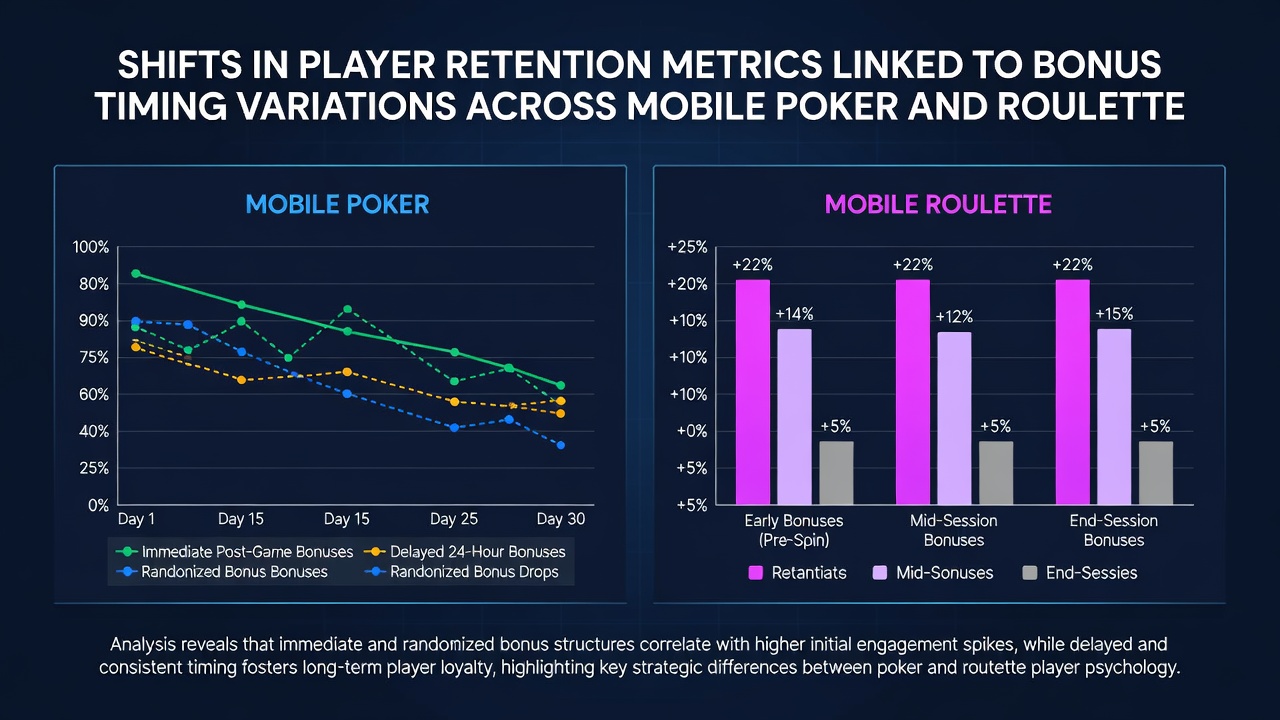
Take the case of one mid-sized operator that moved its roulette bonus window from 8 p.m. to 10 p.m. local time in select markets. Retention among users aged 25 to 34 increased steadily over the following eight weeks, while older cohorts showed little movement. The same timing shift applied to poker tables produced flatter results because evening peak play already aligned with existing hand-volume bonuses. Analysts reviewing the experiment concluded that game-specific timing calibration, rather than uniform schedules, drives the clearest retention lifts.
Measurement Challenges and Data Sources
Tracking precise cause-and-effect relationships remains difficult because players often switch between multiple titles within a single session. Nevertheless, aggregated telemetry from several large networks demonstrates consistent directional trends when bonus timing changes occur. The Malta Gaming Authority published aggregate iGaming statistics through August 2026 that include category-level retention curves, allowing operators to benchmark their own timing experiments against broader market movement.
Academic researchers have begun incorporating timestamped bonus data into longitudinal studies of player behavior, moving beyond simple monthly active user counts. These papers highlight how small adjustments, such as delivering a poker tournament ticket exactly 48 hours after a deposit rather than immediately, produce different re-engagement rates than instant rewards. The timing variable appears especially influential among users who maintain accounts on both poker and roulette platforms, where cross-game migration can offset losses in one vertical with gains in another.
Conclusion
Evidence gathered through September 2026 confirms that bonus timing functions as a controllable variable with measurable impact on retention metrics across mobile poker and roulette. The effects differ by game mechanics, player demographics, and regional playing habits, which explains why uniform schedules rarely optimize results for both verticals simultaneously. Operators continue to refine activation windows using platform data, regulatory reports, and emerging academic research to align incentives with observed session patterns.